culture
Shimokitazawa's Vibrant Street Murals Transform Neighborhood Into Open-Air Gallery
A guide to the neighborhood’s vibrant public art scene, from closed-shutter murals to an annual light-art festival.
How we reported this
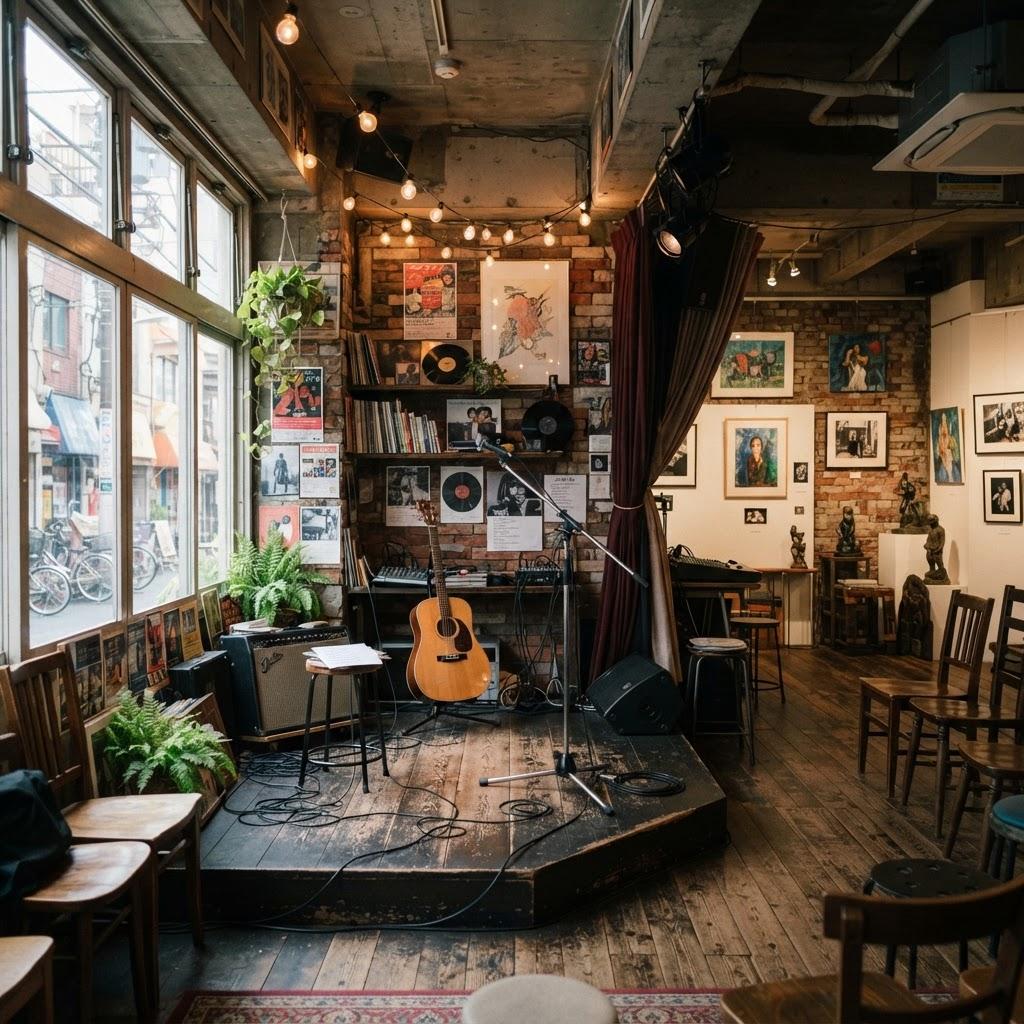
Shimokitazawa has long been a bohemian hub in Tokyo’s Setagaya City, and its maze-like alleys double as an open-air gallery. The neighborhood’s street art is found not on grand walls but on the roll-down shutters of closed shops, on doorways, and on utility boxes-canvases that transform everyday infrastructure into a rotating exhibition of bold abstract designs and intricate illustrations.
Shutters as Canvases
Much of the area’s colorful street art is painted on the metal shutters that store owners pull down at night. According to guides and local media, many of these pieces are commissioned by shopkeepers themselves, working with local artists to beautify the blocks and deter illegal tagging. The result is a streetscape where a simple walk down a backstreet reveals a spectrum of styles: from geometric patterns to whimsical characters, all layered into the fabric of Shimokitazawa’s postwar architecture. The practice has turned the district into a living, breathing museum that changes as businesses open and close.
A Mural That Honors the Land’s Past
A particularly striking mural stands at Shimokitazawa Station, dedicated to agricultural workers. It commemorates the area’s history as rice fields before it became a dense urban village. The artwork serves as a visual reminder of the neighborhood’s transformation, connecting today’s bustling streets of vintage shops and live music venues to a time when the land was farmed. For visitors, it’s a grounding anchor in a district known for its fast-paced reinvention.
The Annual Moon Art Night
Beyond the fixed murals, the neighborhood’s public art scene has a seasonal highlight. Each autumn, Shimokitazawa hosts Moon Art Night Shimokitazawa, a festival that turns the district into a light-art installation. A centerpiece of recent editions has been Luke Jerram’s “Museum of the Moon,” a 7-meter-wide glowing replica of the lunar surface. The event draws both locals and visitors into the alleys after dark, transforming familiar corners into ethereal, illuminated spaces. No specific dates for this year’s event have been announced, but it remains a defining cultural moment in the local calendar.
How to Experience the Art
Exploring Shimokitazawa’s street art requires no map or ticket-the works are embedded in the neighborhood’s daily life. The best approach is simply to wander the narrow lanes branching off the main shopping streets. Many shutters are visible during daytime, though some pieces are only fully revealed when shops are closed. Because the art is tied to active businesses, the gallery is always evolving; a mural seen one season may be gone the next, replaced by a fresh commission. For those wanting a deeper understanding, several walking tours include stops at key shutter murals and the agricultural-workers piece at the station. The experience is free and entirely organic-a reflection of Shimokitazawa’s enduring identity as a creative refuge in Tokyo.